
Frequently Asked Questions Rate Adjustment 2027
Below are some of the common Frequently Asked Questions.
Download a PDF of the Frequently Asked Questions
Many people in our community are facing challenging times, and no one wants to see rising electric bills. We recognize our responsibility to work to keep bills as low as possible and have worked hard to manage our costs.
In April 2026, we announced the results of our cost-of-service study, which indicated the need for a rate increase for our members. Your Board of Directors made the decision to move forward with annual rate adjustments starting in 2026. Beginning on January 1, 2027, members will see an overall average rate adjustment of 2.8%.
The 2027 adjustment will affect members differently based on usage and rate class (see question #4 below).</p?
The 2.8% increase represents the overall percentage that the Cooperative’s revenue collected through electric rates will increase and is the annual average rate adjustment across all members and rate classes. The 2.8%adjustment equates to approximately $2.2 million in additional revenue for the Cooperative over a year’s time.
Find full details of the rate adjustment, including a breakdown of the new rates for each Stearns Electric association rate class, at stearnselectric.org/rate-adjustment-2027.
In the past, Stearns Electric has made larger rate adjustments that were designed to last several years. We often call this a “traditional” rate adjustment. With this approach, the Cooperative collects all the revenue it expects to need starting in the first year, and that rate typically stays in place for three to five years. This approach results in over collecting in early years and under collecting in later years of a rate adjustment.
Beginning in 2026, Stearns Electric’s Board of Directors voted to move to an annual rate adjustment approach. This means smaller, more predictable changes each year as needed − similar to cost of living adjustments − instead of larger increases spread years apart.
You can see from the graphs below that the rate increase of 2.8% in 2027 is actually lower than the predicted 3.3% increase from the most recent cost-of-service study in early 2026.
Annual adjustments allow the Cooperative to collect only the revenue needed for that specific year. By moving to smaller annual rate adjustments instead of larger increases every few years, it helps keep rates fair by matching costs more closely to actual needs.
Stearns Electric will continue managing the costs we can control and working in members’ best interests to keep bills as low as possible while still providing the safe, reliable electricity you depend on.
Further, we will continue conducting an independent rate study every three to five years to ensure our rates remain aligned in a way that is fair and equitable for all members.
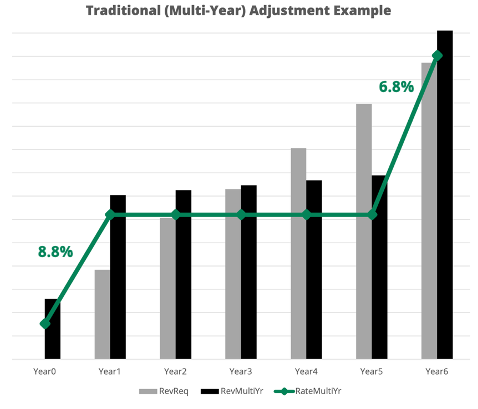
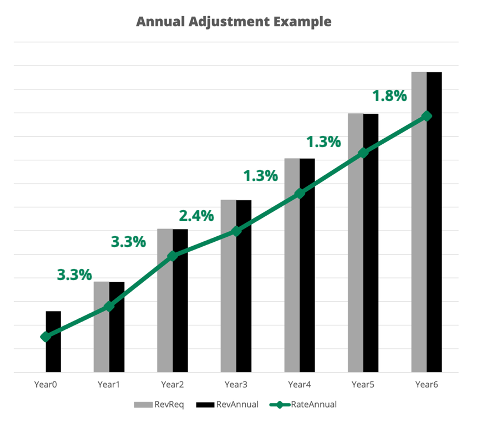
Click on the images to make them larger
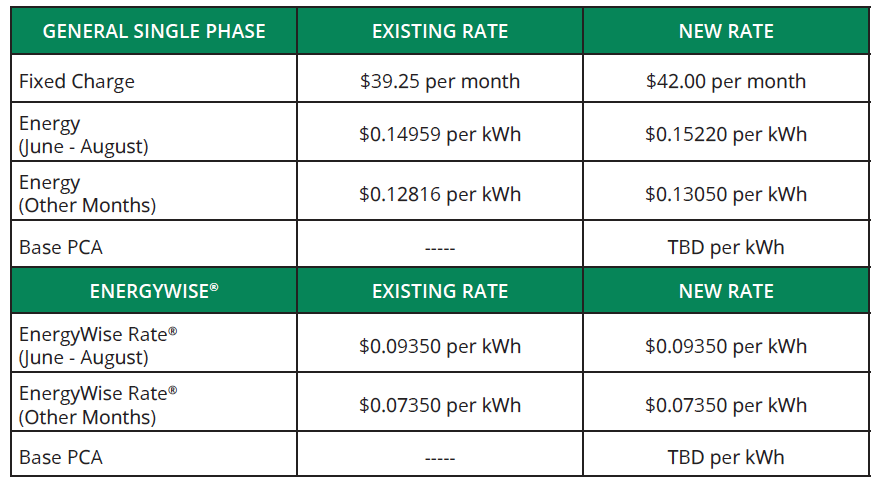
The 2027 adjustment will affect members differently based on usage and rate class. Most residential members are part of our largest rate class based on the total amount of energy used across our distribution system called General Single Phase (GS1).
The graphs below compare monthly bill impacts for members in the GS1 rate (based on energy use) before and after the rate adjustment implementation. At this time, these graphs do NOT include the Base Power Cost Adjustment (PCA) as it remains unknown. This information will be updated as soon as the Base PCA is determined for 2027.
Monthly bill totals are on the left (vertical axis,) while monthly energy use levels are along the bottom (horizontal axis.) Identified above each energy level on the graph are the anticipated rate increases in both dollars and percentages. Please be aware that taxes, local fees and variable monthly power cost adjustment (PCA) charges/credits are not included.
Monthly bill impact percentages that are greater than the overall annual average increase of 2.8% happen for a few reasons:
• An account has lower-than-average monthly energy use. Even though energy charges are low, the total Fixed Charge increased $2.75 (or 7.0%). Accounts impacted in this scenario are often seasonal properties or apartment dwellings. See below for additional information on the Fixed Charge.
• Energy rates are higher in the summer compared to non-summer energy rates.
• Rate class adjustments were made in accordance with the most recent cost-of-service (COS) study results -some rate classes required a higher percent increase while others required a smaller increase.
These reasons are a result of the COS study analysis. The COS study aligns incurred costs to appropriate rate classes and rate components ensuring any changes to rates were implemented fairly across all Stearns Electric member-consumers and rate classes.
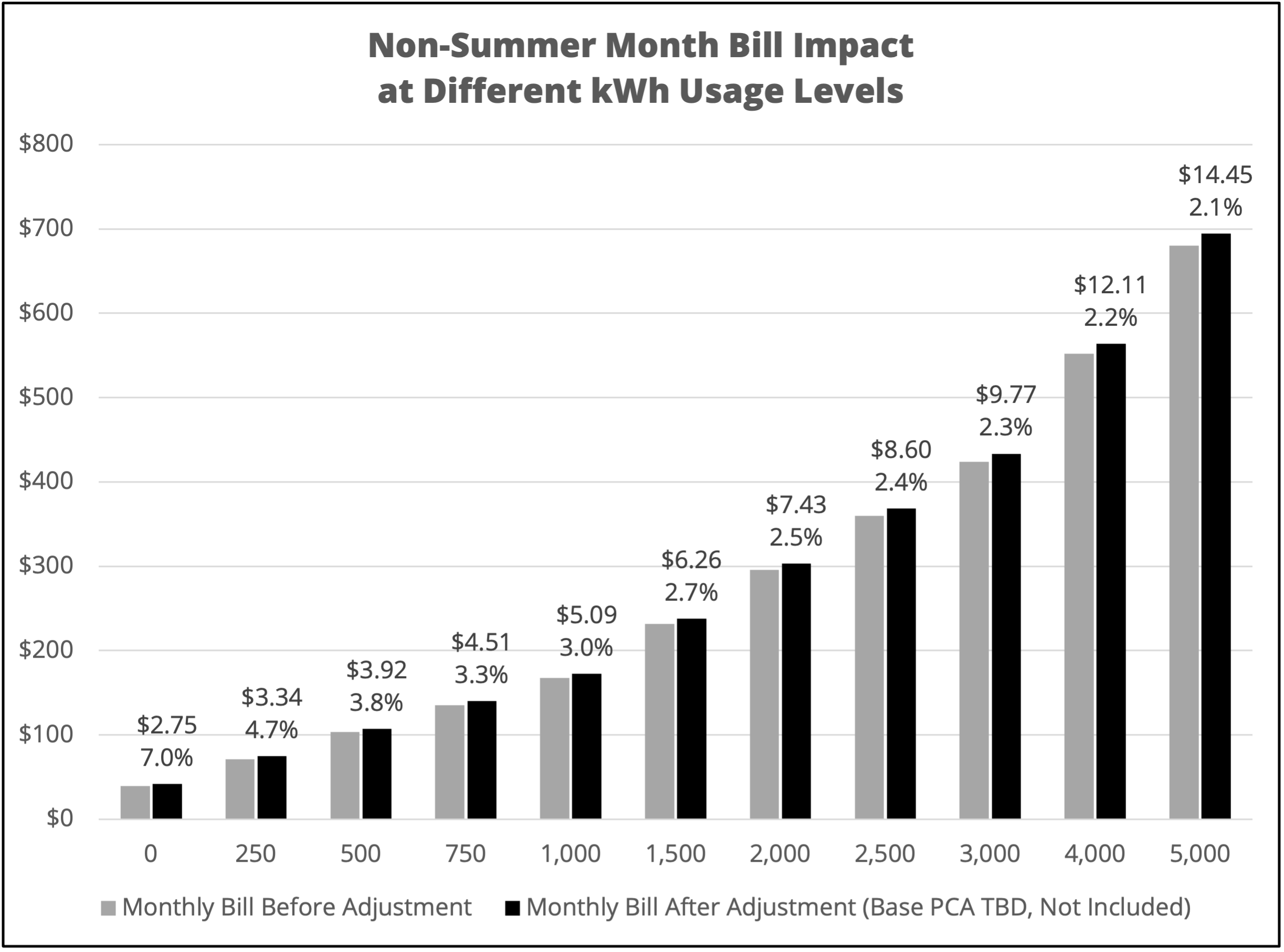
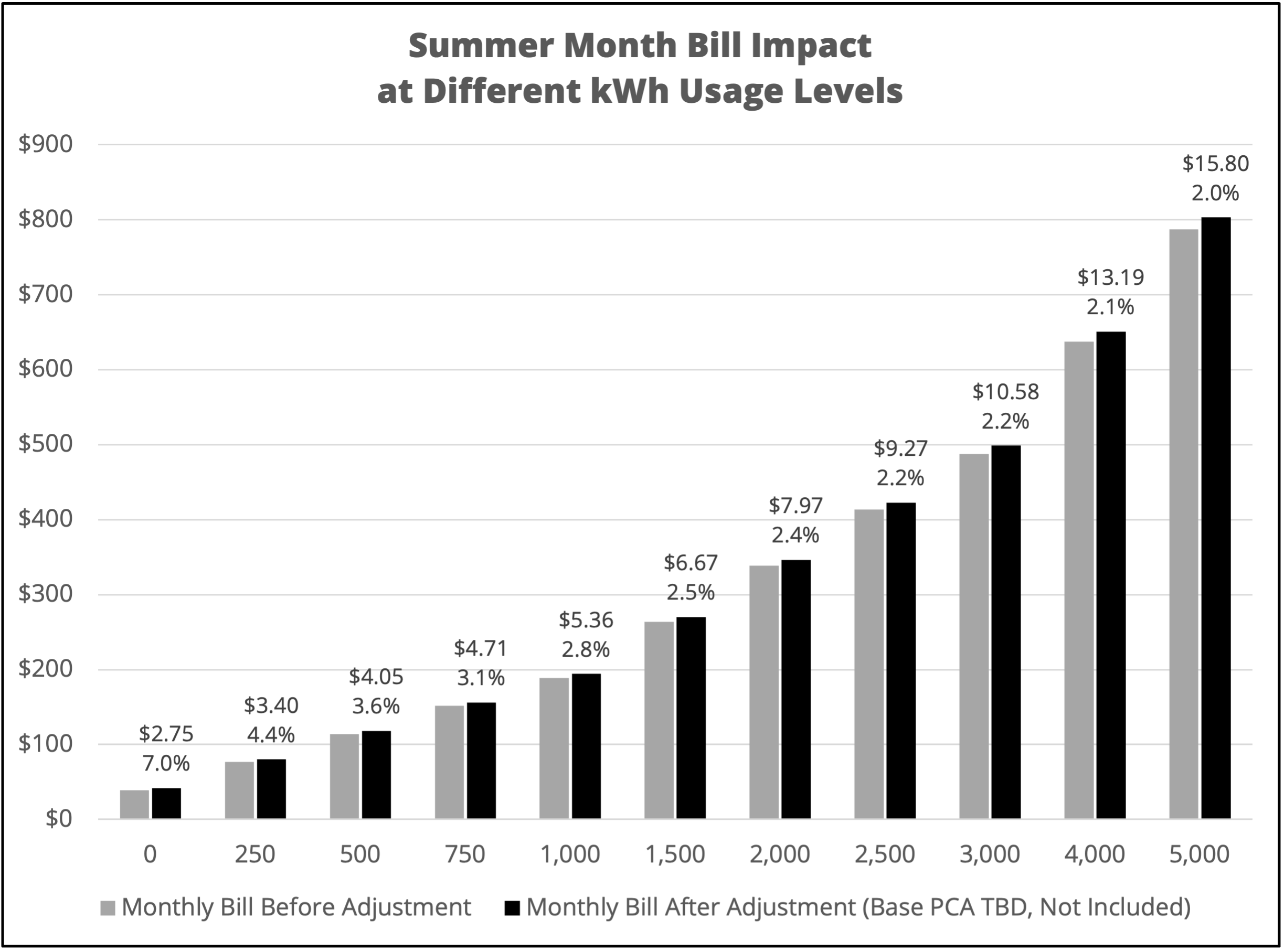
Click on the images to make them larger
Electric cooperatives like Stearns Electric are not-for-profit, meaning we work toward a zero-based budget by the end of each year. However, projections for 2027-2031 indicate that the Cooperative needs an increase in revenue to continue providing our members with the reliable electricity you depend on.
We want our members to understand what goes into their bill and why bills are increasing. You can read further on in this document for details on the specific driving factors of the rate increase and how it was determined.
Stearns Electric is facing sustained cost pressures that are largely outside the Cooperative’s control. Wholesale power − our single largest expense − continues to increase as Great River Energy invests in transmission infrastructure needed to maintain long term reliability. At the same time, inflation is driving up the cost of equipment, materials, trucks, tools and personnel costs, while energy sales growth has not kept pace with those rising costs.
Even with aggressive cost saving measures and operational efficiencies, these combined pressures mean a rate adjustment is necessary to keep the Cooperative financially stable and able to provide safe, reliable service.
The chart below reflects the change in rates effective January 1, 2027 for our most common rate classes. Additional rate class adjustments can be reviewed on our website at stearnselectric.org/rate-adjustment-2027.
Click on the image to make it larger
Beginning in January 2027, approximately 670 members will begin seeing a new line item on their monthly bill: a Demand Charge. If you are one of these members, you will receive direct communication from the Cooperative.
Visit our website, stearnselectric.org/demand to learn more.
For many years, electric utilities like Stearns Electric could reduce on-hand inventory and add capacity only when demand required it. This worked well during stable conditions, but when the pandemic happened, this practice proved vulnerable. Since the COVID-19 pandemic, wars, trade disputes and supply disruptions have continued to change the way manufacturers, suppliers and electric utilities plan. We must keep more inventory on-hand, increase capacity and plan projects further in advance to ensure reliability for our members and resilience of the power grid in order to be prepared in this new, riskier environment. However, those changes come with additional costs.
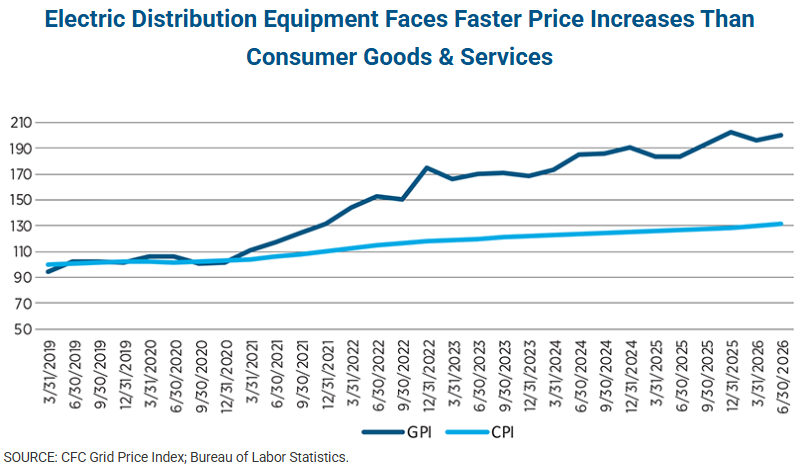
Like many of the members and businesses we serve, Stearns Electric’s finances and operations have been significantly affected by the rising costs of equipment, materials and services. For example, the price for key pieces of our distribution infrastructure such as poles, wires, transformers and meters has risen by as much as 50% over the last few years.
To further illustrate, the graph on the next page shows the Grid Price Index (GPI), which includes a fixed basket of items (i.e., transformers, conductors, cable accessories, utility hardware, etc.) most commonly purchased by electric utilities, compared to the Consumer Price Index (CPI). Since 2019, the CPI has risen by a significant 30% with the GPI increasing more than three times that level.
Click on the image to make it larger
While Stearns Electric’s membership continues to grow, that growth has slowed over the past decade, which limits overall energy sales. At the same time, we are still responsible for maintaining more than 2,000 square miles of electric infrastructure needed to reliably serve over 29,000 members.
In addition, generation and transmission costs from Great River Energy (GRE) and the Western Area Power Administration (WAPA), our wholesale power providers, have increased, too. These increases are driven by higher power market prices and rising capital costs. Since our rate adjustment in 2023, annual wholesale power cost increases in 2024, 2025 and 2026 have resulted in a 7.7% increase to members’ bills through the Power Cost Adjustment (PCA).
Wholesale Power Costs
• Minimal load growth throughout Great River Energy’s footprint
• Increased prices to purchase electricity from the market
• Increased personnel costs
• Higher capital costs, mainly due to upcoming local transmission projects that will improve reliability and replace aging power lines
Distribution Expenses
• Minimal growth
• Increased material and equipment costs
• Increased operational expenses (i.e., inflation, interest, depreciation, supplies, etc.)
• Increased personnel costs, including benefits, employee pay and insurance costs, as well as increased costs needed to comply with new legislation such as Minnesota’s Paid Leave program
As your power provider, it is our responsibility to manage the costs we can control before asking our members to pay more for their energy.
We’ve been able to operate without a rate increase the last few years by actively managing costs, making efficiency improvements and maximizing technology.
Some specific ways we have controlled costs over the last three years include:
• Continuing to offer load management programs to help reduce wholesale energy costs for both members and the Cooperative
• Analyzing energy consumption across our distribution system to better understand demand peaks and implementing peak reduction measures
• Ensuring our Right-of-Way program continuously meets performance metrics and safety standards while remaining within budget
• Remaining committed to bidding out materials and projects, such as power poles, wire, transformers and office supplies, to get the best value
• Actively connecting with state representatives and lobbying for smart energy legislation
• Managing asset (i.e., vehicles, equipment, trailers, printers, iPads, etc.) replacement with reliability and extending the life of equipment whenever possible
• Conducting a comprehensive review of sales tax on all purchases to ensure eligible tax savings are applied
• Evaluating and offering various employee health insurance options
• Reducing printer inventory and implementing secure print to minimize unnecessary printing
• Installing safety equipment vending machines to improve efficiency and streamline reordering
As a not-for-profit electric cooperative, we don’t set our rates to make a profit. We are service-driven and operate at cost. When profits are made (margins), they are returned to members in the form of Capital Credits.
Stearns Electric worked with Power System Engineering (PSE), an independent consulting firm that specializes in helping electric utilities plan for future costs and system needs. PSE completed a detailed Cost-of-Service study to look at what it truly costs to operate the Cooperative and maintain reliable electric service over time.
The study showed that current revenue is not enough to support day to day operations and the long term investments needed to keep the electric system safe and reliable. Using this information, the Stearns Electric Board of Directors approved a new rate plan they believe best supports the Cooperative’s financial health while treating all members fairly.
A Cost-of-Service study analyzes the Cooperative’s revenue requirements, financial forecasts, projected wholesale energy rates and more to identify costs and revenue needs for the coming years. The study further identifies how those costs are incurred and aligns them to appropriate rate classes and rate components, ultimately creating a guide for designing rates that are equitable to all our members.
To understand how best to respond to these financial challenges, every three to five years the Cooperative hires an independent consultant to perform a Cost-of-Service study to identify costs and revenue needs for the coming years. This Cost-of-Service study process has been used prior to all previous rate adjustments to ensure any changes to rates are made equitably across all of the Cooperative’s rate classes.
The study concluded that a revenue increase of 3.3% was needed in 2027 to avoid making cuts that would undermine our ability to meet service goals and support ongoing investments in the quality and integrity of our electrical distribution system. Based on additional work updating the Long Range Financial Forecast for 2027-2031 that was completed in August 2026, we determined only a 2.8% increase was needed in 2027 (totaling $2.2 million.)
Stearns Electric does not generate electricity. Instead, the Cooperative purchases power from Great River Energy (GRE) and the Western Area Power Administration (WAPA) and then delivers that electricity to members through our local distribution system. This means a large portion of what members pay each month goes directly toward the cost of buying power.
In fact, about 64 cents of every dollar members pay for electricity goes toward purchasing the power that Stearns Electric delivers.
When GRE or WAPA’s wholesale power costs increase, those costs are passed on to Stearns Electric and, in turn, to members through the Power Cost Adjustment (PCA).
In 2026, the annual portion of the PCA (Base PCA) was built into the energy rate. Any PCA on your bill for usage from May 1, 2026 to December 31, 2026 reflected month-to-month changes in wholesale power costs (Monthly PCA).
Beginning January 1, 2027, a Base PCA charge of $TBD will be included on your monthly bill. It will be combined with the Monthly PCA throughout 2027.
• Base PCA: The Base PCA is a per kWh dollar amount calculated and fixed annually reflecting year-over-year adjustments in wholesale power costs.
• Monthly PCA: The Monthly PCA is a per kWh dollar amount reflecting month-to-month variability in wholesale power costs primarily driven by the effect of weather and fuel prices on market costs. The Monthly PCA corresponds to power cost adjustments (charges or credits) the Cooperative is assessed each month by its power supplier(s).
Stearns Electric last increased rates in May 2026. Past rate adjustments have also been 2023, 2018, 2013 and 2008.
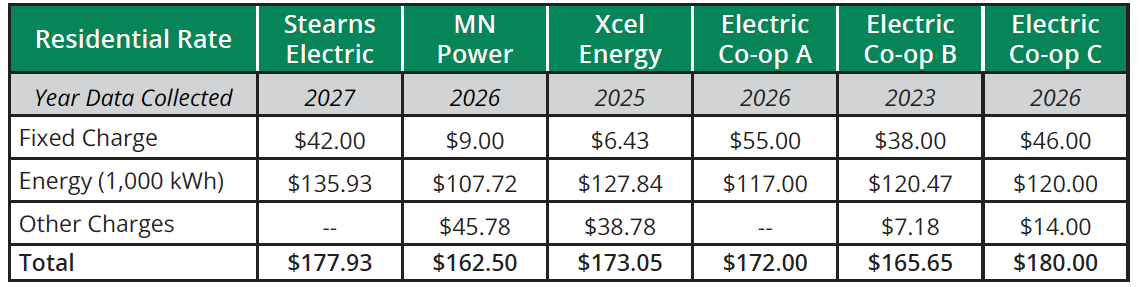
Stearns Electric’s rates are fair and competitive when compared with other electric utilities in Minnesota. The chart below shows how our rates compare to nearby cooperatives and other providers across the state.
Click on the image to make it larger
The table reflects Stearns Electric’s best interpretation of currently published rates and charges for each utility; taxes and local fees not included. At this time, this chart does NOT include the Base Power Cost Adjustment (PCA) as it remains unknown. This information will be updated as soon as the Base PCA is determined for 2027.
The Fixed Charge is a monthly charge that helps cover the cost of delivering electricity to your home or business. This includes things like maintaining power lines, making repairs and having crews and equipment ready to respond when service is needed. These costs exist no matter how much electricity you use.
Because these delivery costs don’t change based on usage, the charge is “fixed” and is the same for all members within each rate class.
Most of the costs required to provide safe, reliable electric service are fixed. This includes owning, operating and maintaining more than 4,200 miles of power lines across our service area, as well as basic business functions like billing, customer service and accounting. The Fixed Charge helps ensure these essential services are always available to our members.
Stearns Electric understands that rising costs can be challenging, and we are here to help. If you’re having trouble paying your electric bill, please reach out to us as soon as possible. Our team is available during regular business hours at (800) 962-0655 to talk through your options and help you find support.
There may be payment arrangements or assistance programs available, including Minnesota programs that help income qualified households with energy costs. We can help connect you with those resources.
No member should be without electricity when they need it. We are committed to working with our members and treating every situation with care and respect.
Stearns Electric offers several tools and programs that can help members better manage their energy use and lower their electric bills. Small changes can add up, and we’re here to help you find options that work for your home or business.
We can help members identify energy saving improvements, and rebates are available for many upgrades. These programs are available to residential, commercial, industrial and agricultural members.
Stearns Electric also offers options that can make bills easier to manage, including automatic payment, budget billing and energy efficiency programs. Many members find these tools helpful in smoothing out costs and staying on track.
To learn more about these programs and find the options that are right for you, please visit our website or contact us – we’re happy to help.
Our website, stearnselectric.org, is a great resource to learn more about your electric service. If you have questions or wish to speak directly to a Cooperative representative, call our offices during regular business hours at (800) 962-0655.